Co-Founder and Co-Manager
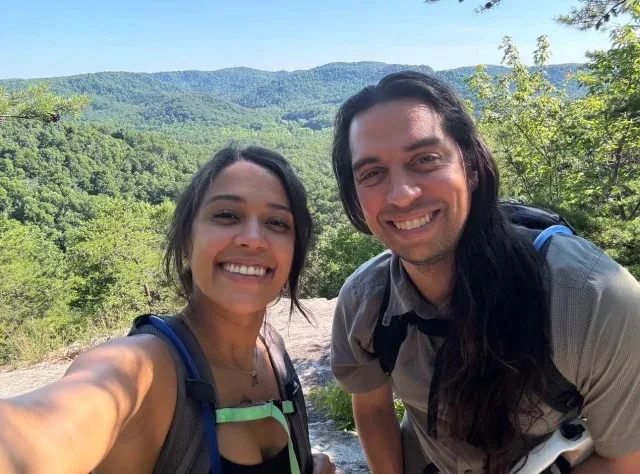
Nicholas Wright
Co-manages the cooperative and is a beneficiary under the family’s irrevocable trust for Indian Fort Outpost.

Governance and Principles
Meet the Wright family founders and learn how the Rochdale Principles guide Unify Cooperative’s organization and independence.
Governance
Nicholas Wright and Maya-Lis Wright manage the cooperative. Their father, Col. David J. Wright, guides its development and serves as trustee for the Kentucky property.
Nicholas and Maya-Lis have proposed a cooperative of up to 100 members, with one vote per member. Indian Fort Outpost and what members choose to develop there are the basis of the proposal. The founders are working out the governing terms, how members would participate and how the cooperative would secure use of the property.
Co-Founder and Co-Manager
Co-manages the cooperative and is a beneficiary under the family’s irrevocable trust for Indian Fort Outpost.
Co-Founder and Co-Manager
Co-manages the cooperative and is a beneficiary under the family’s irrevocable trust for Indian Fort Outpost.
Co-Founder and Trustee
Guides development and serves as trustee of the irrevocable trust for Indian Fort Outpost.
Institutional Continuity
Unify Cooperative carries forward work shaped by Ecology Crossroads Cooperative Foundation and Globcal International. Conservation, education and international cooperation give that work its direction. Publishing and shared administration give it an operating home.
Our current structure is a family-led, unincorporated cooperative society in formation, based in Kentucky. Its activities pursue nonprofit objectives. The founders are developing the terms of membership, property use and financing.
The Rochdale Tradition
Our organizing principles follow the Rochdale cooperative tradition as expressed by the International Cooperative Alliance.
Participation is voluntary and guided by the purpose of the cooperative and the responsibilities of membership.
Members have a voice in common decisions and in how the cooperative is held accountable.
Contributions and shared resources are directed by members toward the cooperative’s stated purposes.
Partnerships should preserve the cooperative’s ability to govern its own work.
We document and share knowledge that helps people participate and carry out the work.
We look for practical ways to work with cooperatives and other community-led groups.
The value of each initiative is measured first by the people and places it serves.